
Nowadays, with the popularization of electric vehicles, charging piles and battery swapping cabinets are the two mainstream energy supplement methods. However, a closer observation reveals that battery swapping cabinets are quietly changing people's travel habits and may even become the mainstream choice in the future. The following compares the differences between the two from four perspectives—practical experience, efficiency, safety, and business models—and uncovers the potential of battery swapping cabinets.
The biggest pain point of charging piles is "the inability to wait." Regular charging for electric vehicles takes 6-8 hours, and even fast charging requires 1-2 hours. For high-frequency users like food delivery riders, time is money, and charging piles clearly cannot meet their needs. In contrast, the "swap-and-go" model of battery swapping cabinets allows battery replacement to be completed in about 10 seconds, barely affecting work rhythms.
Charging piles require fixed installation, occupy a large amount of space, and in dense areas, "it’s often hard to find a charging spot." On the other hand, battery swapping cabinets are compact in size (similar to express delivery lockers) and can be flexibly deployed in scenarios such as business districts, communities, rider stations, electric vehicle stores, and CBDs.
Traditional charging piles often cause fires due to unauthorized wiring and indoor charging. According to statistics, 80% of electric vehicle fires are caused by improper charging. Battery swapping cabinets significantly reduce risks through centralized battery management, unified temperature and safety monitoring, and equipped fire-fighting devices. In recent years, relevant departments have also promoted the "replace charging with swapping" policy, with many regions banning electric vehicles from being charged in residential buildings, indirectly paving the way for battery swapping cabinets.
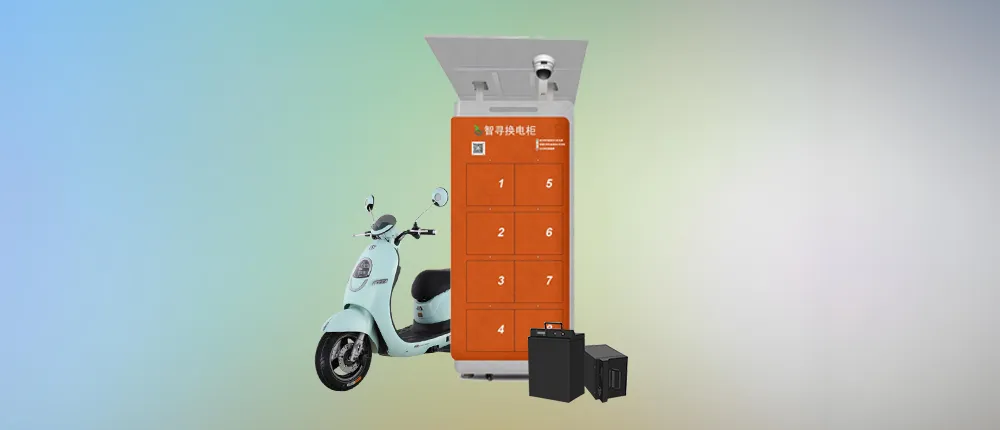
Charging piles have a relatively single profit model and low user stickiness. In contrast, battery swapping cabinets generate recurring revenue through a combination of battery leasing and membership systems. For example, monthly unlimited battery swapping plans cost around 30 yuan, offering 5-10 free swaps, while users can also purchase additional swapping times—featuring a flexible and adaptable operation model. For instance, electric vehicle stores placing battery swapping cabinets can boost vehicle sales, with versatile operation modes such as leasing and direct purchase.
Intelligent Upgrades: Zhixun adopts battery swapping cabinets equipped with fire extinguishers for intelligent charging. Each lithium battery is configured with a 4G positioning and communication terminal, integrated with a rental operation management system that continuously collects battery BMS data and transmits it to the server. The system supports charging, swapping, intelligent control, and rental operation functions for 48V~90V lithium batteries. It also features advanced lithium battery charging safety early warnings, intelligent management of riders' rental payments and battery swaps, GPS positioning for assets and equipment, and remote control functions such as remote power cutoff.

18926572469
18926572469

Add me on WeChat for consultation

Zhixun official account
Zhixun Battery Replacement Cabinet