
In the early morning, countless electric two-wheelers weave through buildings on city streets. Groups of metal cabinets stand quietly on street corners, with flickering indicator lights and the beeps of QR code scanning interweaving into the underlying code of a new energy network. The civilian electric two-wheeler battery swapping market is reconstructing the urban travel ecosystem at an astonishing pace. Industry data shows that the national daily average demand for battery swapping has exceeded 10 million times, and the number of deployed devices has surged by 700% in three years. This silent energy revolution is spawning a trillion-yuan market space. For investors, this is not only a competition for hardware equipment, but also a strategic position to seize the discourse power of urban energy networks.
Behind the huge base of 350 million electric bicycles, high-frequency user groups are driving qualitative changes in the market. More than 40% of users travel over 20 kilometers per day on average, and the safety hazards and efficiency bottlenecks brought by traditional charging modes have become increasingly prominent. Statistics from fire departments show that over 80% of electric vehicle fires stem from the charging process, while the time cost incurred by professional riders due to charging directly affects their income structure. These pain points have given rise to a rigid demand market: a safe, efficient, and swap-and-go energy supply solution.
Policies and technologies form a dual driving force. National-level fire safety regulations have forced the innovation of charging methods. Governments in many regions have included battery swapping facilities in urban new infrastructure plans, clarifying construction standards and subsidy policies for public places. On the technology front, key bottlenecks have been broken through: intelligent battery management systems have doubled battery cycle life, cabinet protection levels have reached industrial-grade standards, and dynamic load technology has tripled the service capacity of a single cabinet. These breakthroughs have cleared obstacles for large-scale operations.
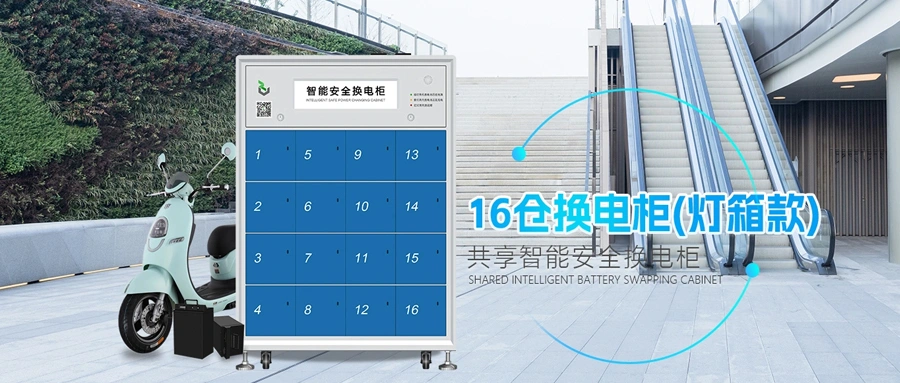
Competition on the hardware side has entered a stage of precision. Equipment manufacturing costs are declining at an annual rate of 18%. Modular design enables compatibility with multiple types of batteries, and continuous optimization of power density has reduced the equipment footprint by 40%. Urban grid layout models show that when a service closed loop is formed every 2–3 square kilometers, user stickiness can reach over 90%, driving enterprises to transform from pure equipment suppliers to operation service providers.
The operation system has become the core battlefield for value creation. Intelligent scheduling systems optimize battery circulation efficiency through real-time data analysis; dynamic pricing models balance supply and demand; and user hierarchical operation strategies increase single-point revenue by 70%. The more profound value lies in the derivative possibilities of the energy network: the exploration of battery asset securitization opens up new financing channels; charging and discharging strategies participate in power grid peak regulation to generate additional revenue; and accumulated travel data provides decision support for urban management.
The undercurrents of risk amid market explosion cannot be ignored. Competition for urban public space has driven up operating costs, with annual rent increases for core area locations exceeding 30%; technological iteration carries uncertainties, as next-generation battery technologies may disrupt the existing equipment system; dynamic adjustments to policy standards require continuous compliance investment. Successful players often adopt a hybrid "hardware + service + data" model, reducing layout costs by binding municipal resources and reserving technology upgrade interfaces to control iteration risks.
Forward-looking layout needs to focus on ecosystem construction. Early-stage investors focus on equipment deployment density; growth-stage capital bets on operational efficiency improvement; while strategic investors have begun to lay out energy management platforms and data services. Industry analysis shows that when the coverage rate of battery swapping networks reaches a critical point, revenue from derivative services will surpass hardware income, forming an exponential growth curve. This means that the investment logic needs to shift from "equipment supplier" to "energy service provider", seizing early positions in dimensions such as power trading, energy storage applications, and carbon asset management.
This energy revolution in the capillaries of cities is essentially a redistribution of energy in the IoT era. When battery swapping cabinets evolve from simple battery containers to smart energy nodes, their value will no longer be limited to the travel sector. For investors, the ability to establish competitive barriers in three dimensions—equipment standardization, operational intelligence, and ecosystem openness—will determine their ultimate position in the trillion-yuan track. As industry observers put it: "The real winners are not those who see the wind of opportunity, but those who have reconstructed the rules of energy flow before the wind blows."

18926572469
18926572469

Add me on WeChat for consultation

Zhixun official account
Zhixun Battery Replacement Cabinet