
The ownership of electric bicycles in China has exceeded 400 million units, with over 10 million practitioners including food delivery riders and couriers, generating a daily charging demand of more than 300 million times. However, the traditional charging mode has prominent pain points:
Efficiency Black Hole: 8 hours of charging only provides 50km of range, forcing food delivery riders to swap batteries more than 3 times a day;
Safety Hazards: 80% of electric vehicle fires are caused by charging, and community charging management is becoming increasingly strict;
Rising Costs: With a charging fee of 2-3 yuan per hour, riders' monthly charging expenses may exceed 500 yuan.
The battery swapping cabinet solution directly addresses industry pain points:
Users can complete battery replacement in 10 seconds by scanning a QR code, eliminating the need to wait for charging and enhancing the daily range for high-frequency users. For businesses, this is not only a convenient service but also a super entry point to tap into smart city infrastructure.
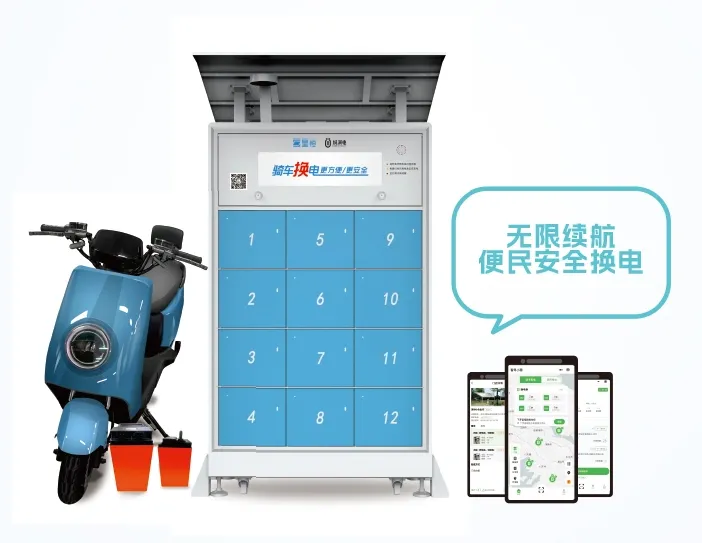
Battery Swapping Cabinet Operation: Profit Model Decoding
In-depth Binding with B-end Enterprises (Core Profit Driver)
Sign strategic cooperation with food delivery platforms and logistics companies, collecting service fees based on riders' daily battery swapping frequency (e.g.: 3 yuan per use × 30 days × 1000 riders = monthly income of 90,000 yuan)
Industrial Park/Community Property Profit-sharing Model: Convert venue rent into traffic revenue sharing to achieve win-win results for all parties
C-end User Membership System (Sustained Cash Flow): Launch a 299-yuan monthly unlimited battery swapping package to convert high-frequency users with daily delivery distance > 80km
Policy Dividends: Apply for new energy infrastructure subsidies
Cabinet Advertising: Lease advertising space to electric vehicle brands for annual advertising revenue per unit
Three Key Signals for Entry in 2025 Have Emerged
Policy-driven: Cities such as Beijing and Hangzhou have explicitly required new residential communities to be equipped with charging/swapping cabinet facilities
Mature Technology: The cycle life of smart batteries has exceeded 2000-3000 times, reducing operating costs by 40%
Capital Influx: Leading enterprises in the industry have successively completed Series B+ financing, and market education has been basically completed
Take Action Now to Seize Core Nodes of Urban Battery Swapping Grids!

18926572469
18926572469

Add me on WeChat for consultation

Zhixun official account
Zhixun Battery Replacement Cabinet