
When selecting the number of compartments for battery swap cabinets, various factors need to be considered, including market demand, operational costs, traffic convenience, competitive environment, and space limitations. Below is a detailed analysis and recommendations for these factors.
Firstly, market demand is a critical factor in determining the number of compartments for battery swap cabinets. The number of electric vehicles in use and population density directly reflect the intensity of potential user demand. In areas with high population density and a large number of electric vehicles, such as bustling commercial centers, densely populated residential areas, and active industrial parks, the demand for battery swapping is robust. In these areas, it is advisable to choose battery swap cabinets with a larger number of compartments, such as 12-compartment smart swap cabinets, to meet peak-period swapping needs, enhance service capacity, and improve economic efficiency. In low-traffic areas, such as small office districts or remote regions, where user demand for battery swapping is relatively lower, cabinets with a moderate number of compartments, such as 4-compartment or 8-compartment cabinets, can be selected to reduce costs.
When choosing the number of compartments for battery swap cabinets, factors such as operational costs, expected revenue, and investment payback period must be comprehensively considered. In the initial stages of entering a new market, priority can be given to using small battery swap cabinets, such as 4-compartment or 5-compartment models, for promotion. These cabinets are compact, highly flexible, and easy to deploy and adjust quickly. As the market gradually matures and stabilizes, a transition can be made to medium or large-sized cabinets, such as 12-compartment or even 25-compartment models, as the primary products.
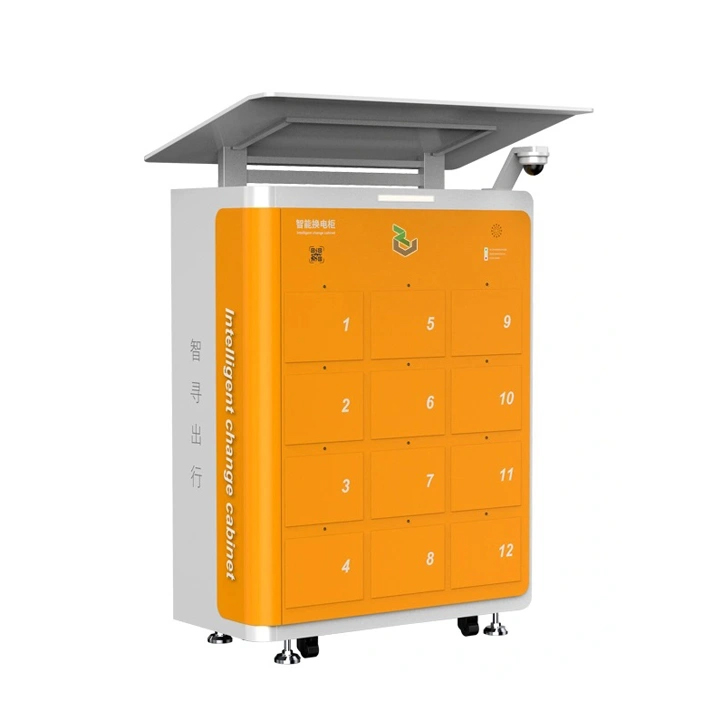
Traffic convenience is another crucial factor that cannot be overlooked when selecting a location. Ensuring that battery swap cabinets are situated in easily accessible locations can significantly enhance user efficiency and experience during battery swaps. When choosing the number of compartments for battery swap cabinets, it is essential to consider the traffic conditions of nearby roads, the availability of reserved space, and the connectivity to public transportation. A battery swap cabinet that is easy to reach and operate can attract more users, thereby fostering positive word-of-mouth promotion.
Space constraints are also a practical consideration when determining the number of compartments for battery swap cabinets. Within limited spaces, it is necessary to plan the layout and number of compartments rationally to ensure that both battery swap demands are met and the surrounding environment and traffic safety are not compromised. In narrow or hard-to-access areas, overly large battery swap cabinets may be difficult to deploy smoothly. Therefore, when selecting the number of compartments for battery swap cabinets, factors such as site size, installation location, and the surrounding environment must be taken into account comprehensively.

18926572469
18926572469

Add me on WeChat for consultation

Zhixun official account
Zhixun Battery Replacement Cabinet